
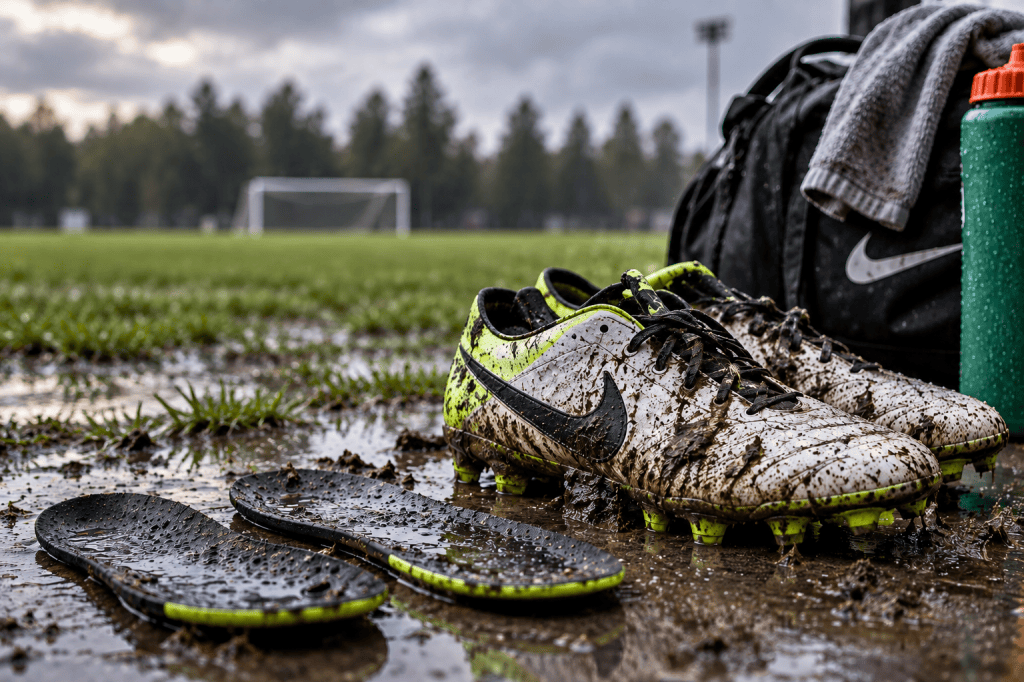
Soccer doesn’t stop just because the field is wet.
Sometimes that means your kid comes off the field with cleats that aren’t just damp — they’re completely soaked. Muddy socks, saturated insoles, water inside the boots…the whole deal.
The temptation is to toss everything into the soccer bag, deal with the laundry and worry about the cleats later. That’s also a pretty good recipe for opening the bag the next day and discovering shoes that are still wet and already starting to smell.
We’ve learned to handle wet cleats a little differently.
What to do with wet soccer cleats when you get home
The biggest thing is simple: don’t leave them in the bag.
As soon as you get home, take the cleats out and give them as much airflow as possible.
Our routine is:
- Remove the insoles. This is one of the most important steps. Moisture can stay trapped between the insole and footbed long after the rest of the shoe feels dry.
- Loosen the laces. You don’t need to completely unlace the cleats, but open them enough to let air circulate inside.
- Open the tongue as much as possible. Again, we’re trying to expose the inside of the shoe to air.
- Wipe away excess mud and water. If they’re really muddy, clean off the worst of it before leaving them to dry.
- Dry the cleats and insoles separately. Don’t put the insoles back until both are completely dry.
That last part is the one we didn’t always do — and eventually learned the hard way.
Why removing the insoles matters
A soccer cleat can feel dry on the outside while still holding quite a bit of moisture underneath the insole.
That’s a particularly bad place for water to hang around because there’s almost no airflow.
We discovered this after one pair of cleats developed mildew underneath the removable insoles. The top of the shoes didn’t look particularly alarming, but when we pulled the insoles out, it was a different story.
Should you stuff wet soccer cleats with newspaper?
You can.
Dry paper can help absorb moisture from inside a very wet pair of cleats, particularly during the first part of the drying process.
We wouldn’t pack the shoes tightly, though. Airflow is still important. Loosely crumpled newspaper or paper towels can help pull out some of the initial moisture, and then we’d remove the paper and let the cleats continue drying normally.
If the paper becomes saturated, replace it.
The goal isn’t to keep wet paper sitting inside the shoes all night.
Can you use a hair dryer?
We wouldn’t.
It might seem like the fastest solution when practice is tomorrow, but concentrated heat isn’t something we’d want to repeatedly expose modern soccer cleats to. Heat can be hard on adhesives and synthetic materials, and there’s really no need to take the chance.
For the same reason, we wouldn’t put wet soccer cleats in a clothes dryer.
Airflow is slower, but much gentler.
What about a boot dryer?
A boot or shoe dryer can be useful, particularly for families dealing with wet practices throughout the season.
The important distinction is airflow versus high heat.
A dryer designed for footwear that circulates air at a low temperature is very different from blasting a cleat with a hair dryer or putting it into a clothes dryer.
If you use one, we’d still remove the insoles and dry those separately.
What if there’s another practice tomorrow?
This is when drying the cleats immediately matters most.
Don’t let them spend three hours sitting in the soccer bag before you remember them at bedtime. The sooner you remove the insoles and start getting air through the shoes, the better chance you have of waking up to dry cleats.
If they’re extremely wet, start with paper towels or newspaper to absorb some of the moisture, then remove it and let the shoes continue drying with plenty of airflow.
And check underneath the insoles before putting everything back together. The outside of the cleat may dry considerably faster than the footbed.

Wet Game Routine
When you get home
Cleats come out of the bag immediately.
If they’re soaked
Remove the insoles, loosen the laces, open the tongues and wipe away excess water and mud.
While they dry
Keep the cleats and insoles separate and give everything plenty of airflow.
Before putting them back together
Check the footbed and underside of the insoles. Both should be completely dry.
The rule: Wet cleats don’t spend the night in the soccer bag.
The bottom line
Drying soccer cleats isn’t complicated. The biggest mistake is simply leaving moisture trapped inside them.
Get the cleats out of the bag, remove the insoles, open everything up and let air do its job.
It takes about a minute when you get home, and it’s a lot easier than dealing with the smell — or mildew — a few weeks later.
 Sideline Selects
Leave a comment