
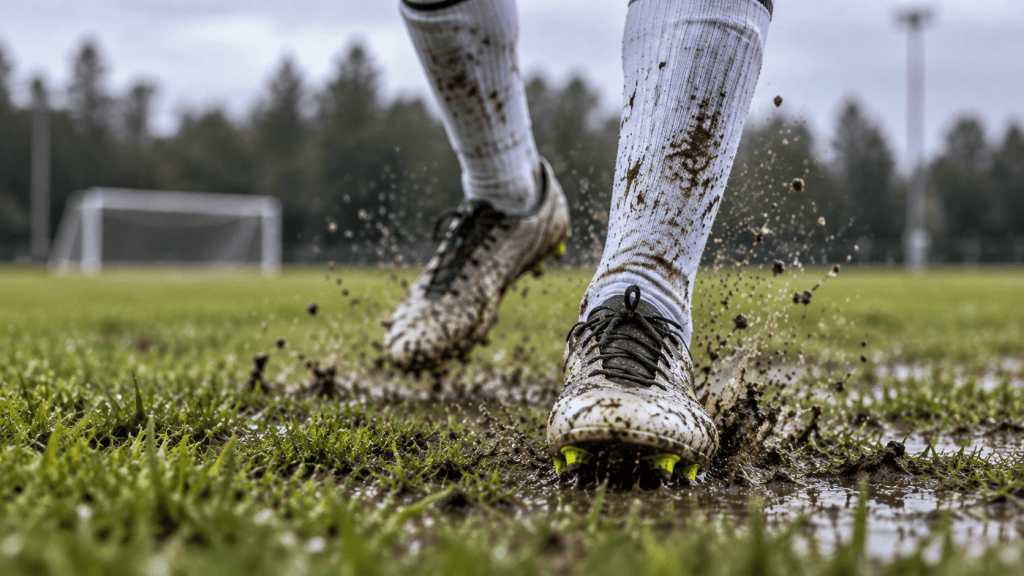
Soccer cleats can get pretty gross, pretty quickly. Sweat is part of the problem, but wet practices, rainy games and cleats tossed into a bag afterward can turn ordinary shoe odor into something much worse — including mildew or mold.
We learned this one the hard way.
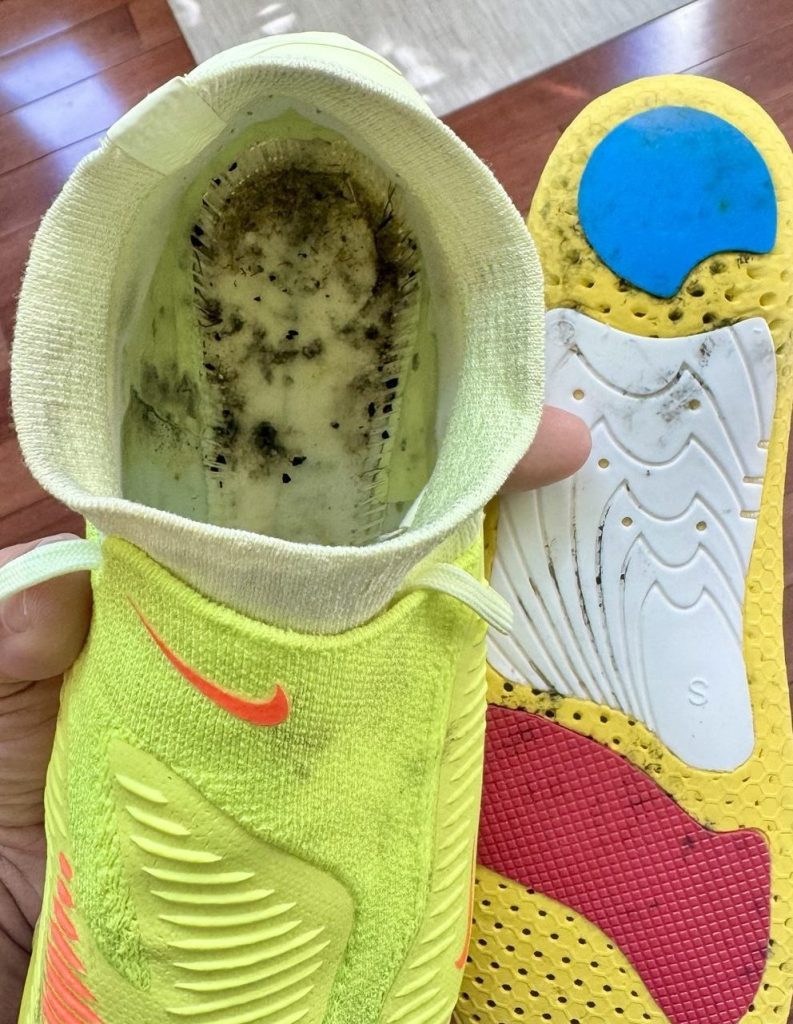
After a few weeks of practices, one pair of our soccer cleats started smelling bad enough that it was time for a real cleaning. When we pulled the insoles out, we found mildew developing both underneath the insoles and along the footbed of the cleats.
The good news: we were able to clean them up. More importantly, we’ve changed how we handle wet cleats afterward so we’re much less likely to end up there again.
Here’s what worked for us, what we’d do differently, and the simple routine we’d recommend for keeping soccer cleats from getting funky in the first place.
Why soccer cleats get so gross
Soccer cleats are almost perfectly designed to hold onto moisture. They’re snug, they’re not especially breathable, and after a practice or game they’re often tossed straight into a soccer bag — sometimes along with wet socks, shin guards and everything else that just spent 90 minutes on the field.
Sweat alone can create plenty of odor, but rain and wet grass make things worse. If that moisture gets trapped inside the cleat, particularly underneath the insole where there’s very little airflow, the shoe can stay damp much longer than you’d expect. That’s when a smelly pair of cleats can become a mildew problem.
What we found under the insoles
In our case, the warning sign was the smell. These cleats had been through a couple weeks of regular practices, including wet conditions, and they had developed that unmistakable something is living in here aroma.
When we removed the insoles, we found visible mildew on the underside of the insoles and corresponding spots along the footbed of the cleats. It wasn’t just surface dirt, so simply spraying something inside the shoe and calling it a day wasn’t going to be enough.
How we cleaned them
We started by removing the insoles so we could clean the two pieces separately. That turned out to be important — most of the moisture and mildew was hiding in the space between the insole and the footbed, an area we normally wouldn’t even see.
- Remove the insoles. Take them completely out so the insole and footbed can be cleaned and dried separately.
- Scrub the affected areas. We used OxiClean and Dawn dish soap on both the insoles and the inside of the cleats, concentrating on the areas with visible mildew.
- Let everything dry separately. We kept the insoles out of the cleats and allowed both pieces to dry completely before putting them back together.
- Finish with a light disinfecting spray. Once clean and dry, we lightly sprayed the cleats and insoles with Bacten. We didn’t saturate them, and again left everything separated while it dried.
The result was dramatically better, but the bigger lesson wasn’t really about cleaning the cleats. It was figuring out why they got this way in the first place.
The real fix: let your cleats dry
This is the part we’d change if we could go back.
After a wet practice or game, don’t leave the cleats zipped inside the soccer bag. Take them out as soon as you get home, remove the insoles and let both dry somewhere with good airflow.
If the cleats are really wet, loosen the laces and open the tongue as much as possible. The goal isn’t complicated: get air into all of the places where moisture likes to hide — especially underneath the insole.
And don’t put the insoles back until both the cleats and the insoles are completely dry.

Our after practice cleat routine
After a normal practice or game
Take the cleats out of the bag and leave them somewhere with good airflow.
After a wet practice or game
Take the cleats out, remove the insoles, loosen the laces and open the shoes as much as possible. Let the cleats and insoles dry separately.
When they start getting funky
Clean the insoles and interior as needed, let everything dry completely, then use a light disinfecting spray.
The one rule we don’t break anymore: Don’t put damp insoles back into damp cleats.
Can you put soccer cleats in the washing machine?
We did — but we wouldn’t make it our first choice.
For this particular cleanup, the cleats had gotten bad enough that we ultimately washed them after removing the insoles. They survived just fine, but machine washing can be hard on adhesives, fabrics and other materials used in modern soccer cleats.
For routine cleaning, we’d start with hand cleaning and spot treatment instead. If you do decide a pair needs a deeper wash, check the manufacturer’s care instructions first — and skip the dryer. High heat is the part we’d especially want to avoid.
Whatever cleaning method you use, the same rule applies afterward: get the cleats completely dry before putting the insoles back in.
When should you replace moldy soccer cleats?
A little surface mildew doesn’t automatically mean a pair of cleats is ruined. If you catch it early, can clean the affected surfaces thoroughly and get everything completely dry, the cleats may be perfectly salvageable.
We’d be much more cautious if mold keeps returning after cleaning, has worked deeply into materials that can’t be cleaned, or the inside of the shoe continues to smell musty even after it’s been cleaned and completely dried.
At some point, especially with something your kid is wearing for hours every week, replacing the cleats is a better choice than repeatedly trying to rescue them.
The same goes for the insoles. If the cleats themselves clean up well but the removable insoles don’t, replacing just the insoles may be the simpler solution.
The bottom line
The best way to deal with smelly soccer cleats is to keep them from staying wet in the first place.
Take them out of the bag after practice. After wet games, remove the insoles and dry everything separately. Clean them when they need it, and don’t put damp insoles back into damp shoes.
It takes about a minute when you get home — and it’s considerably easier than discovering what’s been growing underneath the insoles a few weeks later.
 Sideline Selects
Leave a comment