
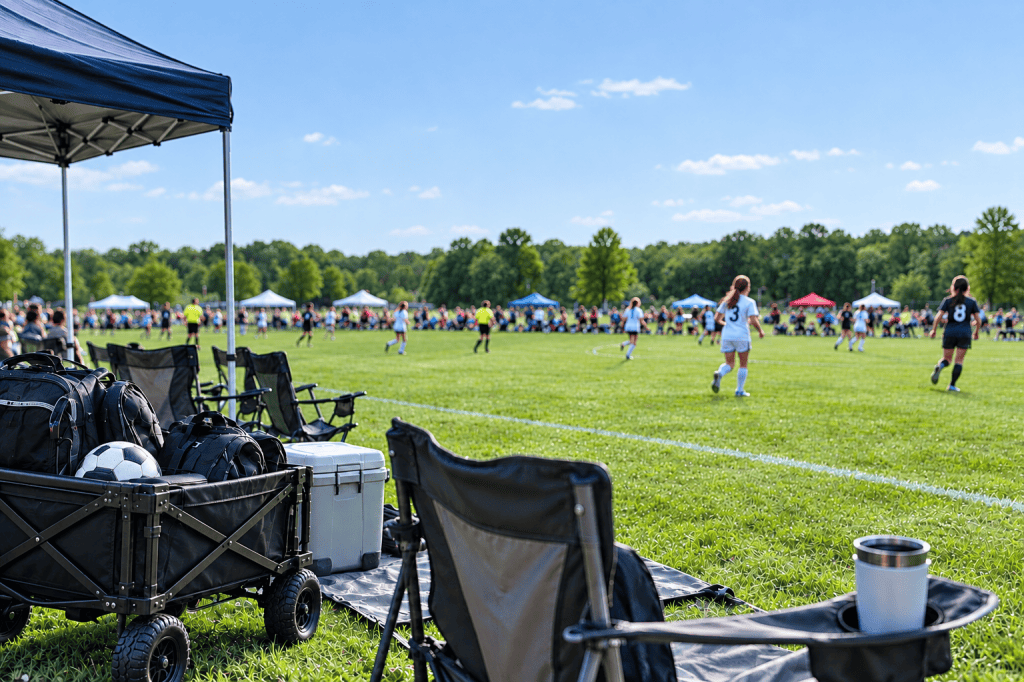
It’s 6:15 on a Saturday morning. You’re trying to get everyone out the door, somebody can’t find their mouthguard, breakfast is barely finished, and the car is packed so tightly that you’re wondering how you’ll ever get everything back in.
And the day hasn’t even started.
You’ve still got to battle an overflowing parking lot, haul 100 pounds of gear across a sprawling sports complex, find the team tent that nobody has told you where to set up, keep a team of kids occupied between games, make sure everyone stays fed and hydrated, and somehow maintain enough energy and enthusiasm to cheer through three games.
Welcome to tournament season.
If you’ve spent enough weekends traveling between soccer and lacrosse fields, you know that tournament days are equal parts exciting, exhausting, and occasionally ridiculous.
We’ve endured scorching summer afternoons, freezing fall mornings, sideways rain, and hotel rooms filled with drying uniforms. Along the way, we’ve figured out which equipment genuinely makes life easier, which purchases weren’t worth the space in our car, and which surprisingly simple tricks have become indispensable.
This isn’t a list of everything you could buy for a youth sports tournament. It’s what we’ve learned actually works.
Whether you’re heading to your first all-day tournament or your fiftieth, here’s how to arrive prepared, keep everyone comfortable, and enjoy the experience.
≣ IN THIS GUIDE
Skip ahead to what you need, or read the whole guide before your next tournament weekend.
A quick note about affiliate links: Some product links in this guide are affiliate links. If you purchase through them, Sideline Selects may earn a small commission at no additional cost to you. As an Amazon Associate I earn from qualifying purchases. Read our full Affiliate Disclosure.
What Stays in the Sports Bag
Before worrying about wagons, coolers, and weather forecasts, let’s start with the one thing that can derail an entire tournament morning: forgotten equipment.
Our approach is simple. If something gets used at every practice or game, it should have a permanent home in the sports bag.
The Soccer Bag
Beyond the obvious cleats, shin guards, socks, and uniform, we like to keep a few extras packed:
- A properly inflated soccer ball. Some teams supply warmup balls, but we prefer having our own.
- A small hand pump and needle. It takes up almost no space and has saved us from more than one underinflated ball.
- Backup shin guards. Nothing fancy. Just an inexpensive, reliable pair in case the regular ones get misplaced or forgotten.
- An extra pair of socks. Especially useful when the first game leaves everything soaked.
The Lacrosse Bag
Lacrosse has a few more pieces of equipment that are easy to forget, particularly when you’re getting ready before sunrise.
Our essentials include:
- Mouthguard and backup mouthguard. One of the smallest items in the bag, and one of the most important.
- Protective goggles. We also keep an older backup pair that’s still compliant with current equipment requirements.
- Liner gloves. Thin Under Armour gloves are a favorite for cold mornings when players still need to feel and control their sticks.
- Extra socks and hair ties. Small things that can become surprisingly important when you’re far from home.
And, naturally, the lacrosse stick itself. Preferably before you’ve driven 45 minutes.
Two Little Tricks That Have Earned Permanent Spots
✓ FIELD TESTED
The Trash Bag Trick
This might be the least glamorous recommendation in our entire guide, but it’s one of our favorites.
We keep a kitchen trash bag tucked into each sports bag. When rain starts coming down, the entire backpack goes inside it. The backpack stays dry on the muddy sidelines or beside the team tent.
That’s it. It’s inexpensive, weighs practically nothing, and takes up almost no room.
We keep one trash bag in each of our sports bags year round, in case a practice gets interrupted by a monsoon. But if rain is in the tournament forecast, 2 or 3 will get stashed in the pack.
✓ FIELD TESTED
The Clip-On Earring Holder
If your player wears earrings that need to come out before games, you know how easily those tiny things can disappear.
We found a small clip-on pill holder that works perfectly as an earring container. It attaches directly to the sports bag, giving earrings a secure place to live during practices and games.
No more loose earrings in side pockets, rolling around the car, or disappearing into the depths of a backpack.
It’s one of those simple little solutions that makes you wonder why you didn’t think of it sooner.

Our Rule: Restock After the Tournament, Not Before the Next One
After each tournament, we remove wet clothes, clean what needs cleaning, and replace anything that’s missing.
The goal isn’t to pack perfectly every Saturday morning. It’s to have the bags ready before Saturday arrives.
We’ll probably still be searching for something at 6:15 a.m. At least it won’t be the mouthguard.
Building Your Sideline Setup
Once you’ve found a parking spot (hopefully somewhere in the same ZIP code as your field), it’s time to get everything to the sidelines.
After years of tournament weekends, we’ve learned that a comfortable setup doesn’t require bringing everything you own. It just requires bringing the right things.
The Wagon: Our Most Valuable Sideline Upgrade
✓ SIDELINE SELECT
The Double Decker Wagon
If there’s one piece of equipment that’s made tournament days easier, it’s our double-decker collapsible wagon.
The upper compartment holds our cooler, bags, and miscellaneous supplies. The lower shelf is long enough to carry folding chairs and a canopy without balancing everything precariously on top.
It rolls well across pavement, grass, and gravel, and saves us from making multiple trips to the car.
Its one weakness? Stairs. If your tournament complex has them, prepare for some creative problem-solving.
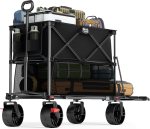
For quick practices or single games, we usually skip the wagon. But for a full tournament day, it earns its space in the trunk.
Chairs, Shade, and a Place to Recharge
Not every sideline chair needs to be expensive. Lightweight folding chairs are easy to carry, while something more substantial can make a big difference during an eight-hour day.
We’ve used everything from basic Amazon folding chairs to the exceptionally comfortable YETI Trailhead. For sunny days, a Renetto canopy chair provides its own shade without requiring another tent.
Our teams typically have a large canopy where players can gather between games. That’s usually enough shade for us, too.
We don’t routinely bring a separate family canopy. It’s another bulky item to transport and set up, and not every tournament allows them.
The goal is to create a comfortable place to sit, get out of the sun, and regroup between games without turning the sideline into a campsite.
Coolers and Hydration: Plan for the Entire Day
Hydration is one area where we deliberately overprepare.
Our players carry 32-ounce Owala FreeSip bottles, with additional water available for refills. We also bring an extra insulated bottle as a backup.
One lesson learned: filling a water bottle with lots of ice sounds great on a hot day until there’s barely any room left for water. The water is gone by halftime and your player is left hoping the ice melts while they’re out on the field.
When we’re handling team-parent duties, we use a large rolling YETI cooler stocked with ice, water, and mini Gatorades.
✓ FIELD TESTED
The Sharpie Trick
Write each player’s jersey number on the cap of their Gatorade bottle before handing it out.
It takes seconds and helps prevent a collection of half-finished, unidentified drinks from accumulating around the team tent.
It’s not sophisticated. But it works.
And when temperatures climb, having cold drinks available between games becomes far more important than having the fanciest cooler on the sideline.
The Setup Rule: Make Every Item Earn Its Space
Before adding something to the wagon, we ask ourselves whether we’ll actually use it.
A comfortable chair? Absolutely.
A cooler with enough water for the day? Essential.
Three different gadgets that sounded useful when we ordered them? Probably not.
The best sideline setup isn’t necessarily the biggest. It’s the one that makes the day easier without creating more work.
Surviving Rain, Cold, and Heat
We’ve experienced just about every kind of weather imaginable at youth sports tournaments. Scorching summer afternoons, freezing fall mornings, sideways rain, and those wonderful days when you somehow experience all three.
The forecast matters, but we’ve learned to prepare for what the weather might do, not just what it looks like when we leave the house.
🌧️ Rain: Keeping Everyone (and Everything) Dry
Rain doesn’t necessarily stop a tournament. It just makes everything heavier, muddier, and considerably less pleasant.
Our first priority is keeping the players comfortable between games. We pack a complete change of clothes, including dry socks, underwear, and shoes. A hairbrush and a warm jacket can make a surprisingly big difference after a soaking-wet game.
For spectators, a genuinely waterproof rain jacket is worth the investment. We’ve had great experiences with a Marmot GORE-TEX shell and Hunter rain boots. An umbrella helps, too, although we’ve learned that standing in the rain is often preferable to sitting in a soaked folding chair.
And don’t forget the trash bag trick from Section 1. A dry backpack means one less thing to deal with when you get home.
✓ SIDELINE SELECT
The DryGuy Boot Dryer
After a rainy tournament, wet cleats can take forever to dry on their own. Our DryGuy boot dryer has become one of our favorite pieces of equipment for getting ready for the next game or practice.
It’s particularly useful during overnight tournaments, when you need to dry cleats before the next morning.
We remove the insoles, open the shoes to improve airflow, and let the dryer do its work. The heat is gentle, and it beats stuffing wet shoes with newspaper or hoping they’ll dry overnight.
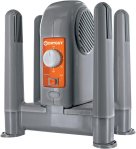
Dealing with soaked cleats? We’ve put together a complete guide to drying them safely and getting them ready for the next game.
❄️ Cold: Dress for the Sideline, Not Just the Game
Cold-weather tournaments can be deceptively miserable. Players are moving during games, but they’re often standing around for long stretches between them.
We’ve developed a rough temperature guide for our players:
| Temperature | Our Usual Approach |
|---|---|
| 60°F and above | ColdGear top optional |
| 50–60°F | ColdGear top strongly encouraged |
| 40–50°F | ColdGear top required; leggings suggested |
| Below 40°F | ColdGear top and leggings required, plus gloves and ear protection |
These are our family’s guidelines, not universal rules. Wind, rain, and individual comfort can change the equation quickly.
For lacrosse, thin Under Armour liner gloves are especially useful because players can still grip and control their sticks. Lightweight running headbands also fit comfortably beneath goggles without adding much bulk.
✓ SIDELINE SELECT
The Swim Parka: Our Cold-Weather Secret Weapon
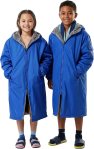
Here’s one you probably won’t find on most soccer or lacrosse packing lists: a swim parka.
Designed to keep swimmers warm between events, these oversized, knee-length coats are just as useful on cold, wet sidelines. The waterproof outer shell helps keep rain and wind out, while the soft, faux fur lined interior provides plenty of warmth.
Our players can throw them right over their uniforms between games without changing clothes. They’re especially useful during tournaments when there’s a long break between games and everyone starts getting cold.
It’s one of our favorite crossover discoveries: gear designed for the pool that’s earned a permanent place on the soccer and lacrosse sidelines.
For parents, we lean on insulated boots, warm socks, rechargeable hand warmers, and inexpensive stadium blankets. And on particularly cold mornings, a team supply of hot chocolate, coffee, and Munchkins can do wonders for morale.
☀️ Heat: Shade, Hydration, and a Few Clever Tricks
Hot tournaments bring their own challenges. When players are running hard in the sun, keeping them hydrated and giving them opportunities to cool down becomes a priority.
We bring plenty of cold water, refill bottles whenever possible, and encourage regular breaks in the shade.
Sunscreen is another non-negotiable. We apply lotion before leaving home and keep spray sunscreen and face sticks in our team-parent supplies for reapplication throughout the day. Bug spray and Aquaphor also have permanent spots in the bag, although Aquaphor isn’t a substitute for sunscreen.
One lesson learned: chocolate-chip granola bars and hot tournament days are not a great combination. Unless you enjoy chocolate-covered fingers and uniforms.
✓ FIELD TESTED
The Cooling Towel Bottle
We keep a dedicated insulated bottle filled with a little ice, cold water, and two or three small cooling towels.
Between games, players can pull out a cold towel to drape around their necks or wipe their faces. The insulated bottle keeps everything cool without needing to dig through the team cooler.
We use this bottle exclusively for towels, not drinking water, and wash the towels between uses.
No batteries, no bulky misting fan, and no extra equipment to haul across the complex.
The Weather Rule: Prepare for the Extremes
You don’t need to bring an entire wardrobe to every tournament. But checking the forecast the night before, packing an extra layer, and having a plan for rain or heat can make the difference between a great day and a miserable one.
The players can’t control the weather. We can at least make sure they’re prepared for it.
The Team Parent Toolkit
Being a team parent adds a whole new dimension to tournament weekends. Suddenly, you’re not just keeping your own kids organized. You’re helping make sure an entire team has snacks, supplies, and somewhere to put their stuff.
After a few seasons of juggling these responsibilities, we’ve found that a handful of simple systems make the job considerably easier.
Keeping Team Supplies Organized
✓ SIDELINE SELECT
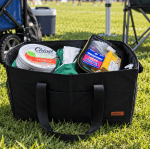
The Team Parent Supply Tote
Our WONDAY utility tote has become a portable supply closet for tournament weekends.
We keep it stocked with all the little things teams inevitably need: paper towels, napkins, plates, trash bags, disinfecting wipes, hand sanitizer, basic first-aid supplies, and emergency snacks.
Its biggest advantage is portability. The sturdy, open-top bag moves easily from our storage area to the trunk, into the wagon, and under the team tent. When the day’s over, everything makes the return trip together.
It’s also the perfect thing to hand another parent when everyone offers to help unload. Big enough to make a meaningful contribution, but manageable enough that almost anyone can carry it.
We liked it so much we bought two more! We now have three dedicated totes, one for each team we help manage. Each stays stocked with its own supplies, so we’re never trying to remember which team used the last trash bag or needs more hand sanitizer.
No juggling loose supplies, no repacking between stops, and no wondering where the extra napkins went.
Team Snacks: Share the Responsibility
Rather than trying to feed an entire team ourselves, we organize a simple snack signup. Our teams use TeamSnap which allows an organizer to add ‘Assignments’ to each game, but a SignupGenius or even Google Form will do the trick.
Parents volunteer to bring fruit, sandwiches, cheese sticks, or other easy between-game food. Everyone brings their contribution in their own cooler, which saves space in the team cooler and helps keep perishables properly chilled.
It’s a small amount of coordination that makes a big difference, especially during tournaments with several hours between games.
The Lacrosse Stick Corral: A Laundry Basket With a Second Career
✓ FIELD TESTED
The Collapsible Laundry Basket Trick
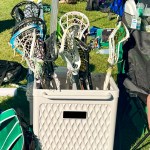
Here’s one of our favorite team-parent discoveries: a collapsible laundry basket makes an excellent lacrosse stick holder.
We stand the sticks upright, handles down, inside the basket. It can easily hold over 20 sticks, keeping them organized together instead of scattered across the grass where someone might step on one.
Players know exactly where to find their sticks between games, and the basket folds flat when it’s time to pack up.
It’s not fancy, but after watching an entire team use it, we’re convinced this is what laundry baskets were meant to do.
The Team Playlist: A Little Music Goes a Long Way
At the beginning of each season, we ask the players to contribute songs to a team playlist.
Between games, we hang a little JBL Clip speaker from the canopy crossbar and play music at a reasonable volume. It’s a fun way to keep the atmosphere relaxed, especially during long tournament breaks.
The coaches handle warmup music, and we keep ours quiet enough that neighboring teams aren’t forced to enjoy our musical selections.
Sometimes the best tournament memories happen when nobody’s actually playing.
The Team Parent Rule: Make It Easy for Everyone
You don’t need to bring an entire sporting goods store to every tournament or take responsibility for everything yourself.
A stocked organizer, a few shared responsibilities, and some clever ways to keep equipment under control go a long way.
The goal isn’t to do everything for the team. It’s to make tournament day a little easier for everyone.
Surviving Overnight Tournaments
An all-day tournament is one thing. An entire weekend away adds a whole new layer of logistics.
Suddenly, you’re not just packing for the fields. You’re coordinating hotel rooms, finding meals between games, keeping uniforms clean enough for another day of competition, and figuring out how to get everyone fed and out the door before the hotel breakfast rush.
We’ve learned that a little planning at the hotel can make the next morning considerably easier.
Make the Most of Hotel Breakfast
A hotel with complimentary breakfast is a tournament-parent luxury. Being able to feed everyone without making another stop is worth more than you might think, especially when your first game is early.
But hotel breakfast can be unpredictable. Sometimes there’s a great spread of eggs, waffles, fruit, and yogurt. Other times, you’re staring at a tray of questionable scrambled eggs and a toaster with a line 15 people deep.
We usually bring a few familiar breakfast options of our own, especially fresh berries, bananas, and apples. Anything that needs refrigeration goes straight into the hotel room’s mini-fridge.
And when the hotel breakfast isn’t going to cut it, knowing where the nearest Starbucks or Dunkin’ is located can save the morning.
The goal is simple: Get everyone fed without turning breakfast into its own competitive event.
Turn the Hotel Room Into a Recovery Station
After a long day of games, the hotel room inevitably becomes a combination locker room, laundry facility, and equipment warehouse.
Before anyone settles in for the evening, we take a few minutes to reset everything for the next day.
Wet uniforms get hung up or spread out to dry. Socks and cleats come out of their bags. Water bottles get washed and refilled. Anything that needs charging gets plugged in.
And if the weather has been particularly uncooperative, our DryGuy boot dryer earns its place in the hotel room.
✓ FIELD TESTED
The Night-Before Reset
Before bed, we lay out the next day’s uniform, socks, shoes, and equipment, then check the game schedule and field location one more time.
It takes about ten minutes, but it eliminates a remarkable amount of early-morning chaos.
Nobody wants to discover at 6:15 a.m. that yesterday’s wet socks are still sitting in the bottom of a backpack.
If you’re traveling with multiple players, this little routine becomes even more valuable. Each player gets their own pile of ready-to-go equipment, and the morning starts with fewer surprises.
Restock Before You Need Something
Tournament complexes aren’t always conveniently located near grocery stores, restaurants, or gas stations. And even when they are, you probably won’t want to leave the fields between games just to buy another bag of ice.
We make a quick supply check on the way back to the hotel or before settling in for the night.
Do we have enough water for tomorrow? Does the cooler need fresh ice? Are we running low on snacks? Did someone use the last of the sunscreen?
A five-minute stop at a grocery store or gas station on Saturday evening beats an emergency supply run on Sunday morning.
Leave Room for the Fun Stuff
Overnight tournaments can be exhausting, but they’re also where some of the best team memories happen.
The kids get to hang out with their teammates away from the field. Families share meals, parents get to know each other, and sometimes the hotel lobby becomes an unofficial extension of the team tent.
We try not to overschedule every minute between games. A little downtime, a casual team dinner, or just letting the kids laugh together at the hotel can be as memorable as anything that happens on the field.
Of course, there’s a balance. A hotel full of excited young athletes can turn into chaos remarkably quickly, and everyone still needs enough sleep to play the next morning.
Our overnight tournament rule: Prepare for tomorrow, but don’t forget to enjoy tonight.
What We Leave at Home
After enough tournament weekends, you start to realize that being prepared and bringing everything you own are two very different things.
We’ve tried our share of sideline gadgets, clever accessories, and things that seemed absolutely essential when we clicked Add to Cart.
Some have earned permanent spots in our tournament setup. Others have quietly disappeared into the garage, never to be seen again.
Here’s what we’ve learned to leave behind.
The Gadgets That Sound Better Than They Work
Portable misting fans are a perfect example. On a scorching summer afternoon, the idea of a cool breeze and a refreshing mist sounds fantastic.
In practice, they’re another bulky thing to carry, fill, charge, and keep track of. And when you’re already hauling chairs, coolers, and sports equipment, that extra convenience starts looking a lot less convenient.
We’ve found that shade, cold water, and our insulated cooling towels do a better job without adding another piece of equipment to manage.
The Oversized Entertainment System
A little music under the team tent can be a great thing. We’ve already talked about our JBL Clip and the team playlist.
But there’s a difference between creating a fun atmosphere for your players and providing the soundtrack for an entire sports complex.
You don’t need a giant Bluetooth speaker, booming bass, or a portable DJ setup to make the team tent enjoyable.
Keep it small, keep it reasonable, and remember that the team three tents over probably didn’t ask to hear your playlist.
Packing for Every Possible Scenario
It’s tempting to pack for every scenario imaginable.
Extra shoes. Extra jackets. Three different blankets. A backup chair. Enough snacks to survive a week in the wilderness.
Some backups are genuinely important. Dry clothes, extra socks, water, and basic first-aid supplies have earned their places in our setup.
But there’s a point where preparation becomes clutter.
If something hasn’t been used in several tournaments, we start questioning whether it needs to come along every weekend.
The Stuff That Creates More Work Than It Saves
This is probably our biggest lesson.
Every item you bring has a hidden cost. Someone has to carry it from the car, find a place for it under the tent, keep it clean or charged, and pack it back up at the end of the day.
A gadget that saves two minutes but takes ten minutes to set up, maintain, and put away isn’t making your life easier.
And when you’re packing up after the final game, tired, hungry, and staring at a long walk back to the parking lot, you’ll appreciate every unnecessary thing you left at home.
✓ FIELD TESTED
The Wagon Test
Before adding something new to our tournament setup, we ask one simple question:
Does it earn its spot in the wagon?
If it makes the day noticeably easier, keeps someone comfortable, or solves a problem we’ve actually experienced, it probably does.
If it’s just another thing to carry because it might come in handy someday, it can probably stay home.
The best tournament setup isn’t the one with the most equipment.
It’s the one that lets you spend less time managing your stuff and more time enjoying the games.
The Tournament Packing Checklist
By now, we’ve covered everything from cleats and coolers to swim parkas and laundry baskets. But when you’re trying to get out the door before sunrise, nobody wants to reread an entire survival guide just to make sure they remembered the sunscreen.
That’s why we keep a simple tournament packing checklist.
Not everything on this list needs to come along every weekend. The weather, tournament schedule, and whether you’re staying overnight will determine what earns its spot in the wagon.
The essentials, though? Those should be ready to go.
Tournament Packing Checklist
Every essential in one printable, one-page checklist. Save it to your phone or print it before your next tournament.
Free PDF – One Page – No signup required
The Tournament Day Essentials
You won’t need every piece of equipment for every tournament, but these are the things we check before heading out.
Player Gear
- Uniform and alternate jersey, if needed
- Cleats or turf shoes, plus extra socks
- Shin guards or lacrosse goggles, stick, and mouthguard
- Filled water bottle
- Hair ties, insoles, and other personal essentials
Sideline Setup
- Chairs, wagon, and cooler
- Water, ice, and snacks
- Sunscreen, bug spray, and hats
- Trash bags and basic first-aid supplies
- Tournament schedule and field locations
Weather Extras
- Rain jackets and a complete change of clothes
- Warm layers, gloves, or swim parka
- Umbrella and waterproof footwear
- Cooling towels and extra water for hot days
Team Parent Supplies
- Stocked team supply tote
- Napkins, plates, wipes, and hand sanitizer
- Team snack assignments
- Stick basket and team speaker, if needed
Overnight Extras
- Hotel confirmation and personal toiletries
- Extra uniforms, socks, and clothes
- Chargers and boot dryer, if needed
- Breakfast foods and next-day cooler supplies
✓ FIELD TESTED
The Final Five-Minute Check
Before pulling out of the driveway, we do one last check of the things that are hardest to replace at the fields:
Cleats. Uniform. Mouthguard. Stick or shin guards. Water bottle.
Everything else is usually a problem we can solve.
Realizing someone left their mouthguard on the bathroom counter when you’re already 45 minutes from home? That’s a much tougher start to the day.
The easiest approach is to pack player gear the night before, load as much of the wagon and cooler as possible ahead of time, and save only the last few essentials for the morning.
And remember: this isn’t a challenge to bring every item on the list.
It’s about bringing the right things, so you can spend less time worrying about what you forgot and more time enjoying the tournament.
The Best Part Isn’t Always the Game
After years of tournament weekends, we’ve learned that the best thing you can bring isn’t a fancy cooler, an expensive chair, or a wagon full of perfectly organized gear.
It’s a little patience.
Leave early enough that parking doesn’t become a crisis. Pack what you can, prepare for the weather, and accept that somebody will inevitably forget something.
Most importantly, remember that your kids might already be nervous.
Big games, unfamiliar opponents, and crowded sidelines can feel overwhelming. They don’t need us adding to that pressure because someone forgot the sunscreen or didn’t tie their shoes the first time we asked.
Give them room to have fun.
Because years from now, they might not remember the score of that Saturday morning game. But they’ll remember the music under the team tent, laughing with their teammates between games, sharing hot chocolate on a freezing sideline, and spending an entire weekend doing something they love.
The games matter. But so does everything that happens between them.
That’s what makes a great tournament weekend.


Leave a Reply